The new metric of comfort in sustainable luxury hotels in Brazil
Sustainable luxury hotels in Brazil are no longer a niche curiosity. They now set the benchmark for what a serious five-star hotel, lodge or villa should feel like, from Rio de Janeiro to the far reaches of Mato Grosso. Comfort is being redefined through limited capacity, disciplined design and measurable environmental performance rather than marble excess.
Across Brazil, the most interesting hotels are quietly shrinking guest numbers while deepening experience. A remote lodge on the edge of a national park will cap rooms at twenty or fewer, not because it cannot build more, but because the surrounding nature cannot absorb heavier traffic without damage. That shift is what separates marketing gloss from genuine sustainable tourism in Rio de Janeiro, Bahia or the interior, where occupancy caps and guided access now protect fragile trails and riverbanks.
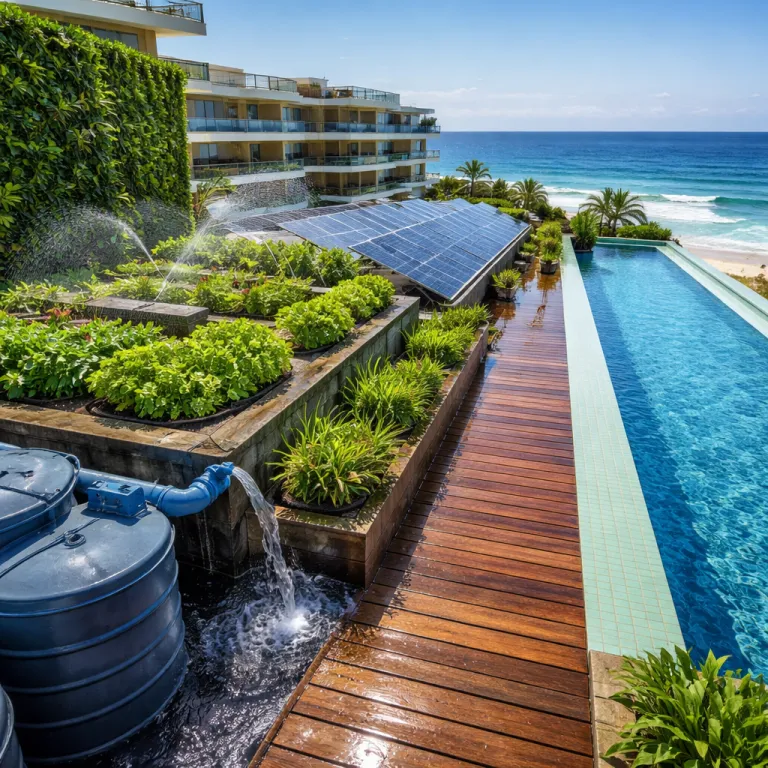
The new luxury is a private sense of space that does not overwhelm the landscape. Think of a villa in Bahia where every suite opens window views onto preserved forest instead of a parking lot, and where built area occupies less than 10 percent of the property. Or a hotel spa in Minas Gerais where the living room of each casita frames the hills like a gallery, while solar panels covering the roofs and rainwater systems sized for 100 percent of non-potable demand quietly carry the load year-round.
Data backs this evolution inside Brazil’s high-end eco-conscious hotels. Travel + Leisure highlighted biodiversity and low-impact luxury as key criteria when it named Brazil a “Destination of the Year” in 2020, signalling that excess is now read as dated rather than aspirational (Travel + Leisure, 2020). At the same time, a federal green credit scheme is lowering borrowing costs for certified lodges by up to 300 basis points, with public development bank guidelines confirming that the best-rated projects receive the maximum discount on interest rates (Instituto Ethos, 2023; BNDES, 2023).
On the ground, that translates into very specific design choices. Ilha de Toque Toque EcoHotel on the north coast of São Paulo operates as a Zero Waste hotel, diverting more than 90 percent of solid waste from landfill and proving that a refined room and a rigorous composting program can coexist (Ilha de Toque Toque EcoHotel, 2024). Cristalino Lodge in the southern Amazon is powered entirely by photovoltaic energy, generating tens of thousands of kilowatt-hours per year and showing how a remote lodge can deliver hot showers and cold caipirinhas without leaning on diesel generators in the rainforest (Cristalino Lodge, 2024).
These properties are not positioning themselves as quirky boutique hotels for eco purists. They are competing head-on with urban hotels in São Paulo or view hotels in Rio de Janeiro, but with a different value proposition. The real luxury is the feeling that your suite, your private deck and your chosen tour are not eroding the very landscapes you came to see, because energy use, water consumption and waste are tracked as carefully as guest satisfaction scores.
From brochure line to balance sheet: when sustainability drives design
In Brazil’s sustainable luxury segment, environmental performance has moved from the last paragraph of a brochure to the first line of a business plan. The federal green credit program is the quiet architect here, because cheaper financing for certified projects forces owners to embed sustainable systems from the first sketch. That is why the most forward-looking hotel and lodge projects in Brazil now start with energy modelling, water reuse targets and projected emissions per occupied room, not with the size of the lobby chandelier.
Take Cristalino Lodge in Mato Grosso as a reference point. Its 100 percent photovoltaic power system is not a decorative gesture; it is a structural decision that shapes how many rooms the lodge can support, how far it can be from the nearest airport and how lightly it can sit within the Amazon rainforest. By sizing the solar array to cover peak occupancy and backup needs, the lodge can keep generators off most of the year. When a property like this proves that high comfort and low impact can coexist, it raises the bar for every other hotel operating near a national park or protected area.
Cambarã Eco Hotel, a certified B Corporation since May 2019, shows the same logic in the highlands. Here, sustainable architecture, waste reduction and community investment are audited, not just advertised, which means the hotel’s balance sheet is tied to its environmental and social performance (B Lab, 2019). Impact reports track indicators such as the percentage of staff hired locally, the share of food sourced within a defined radius and the volume of waste diverted from landfill. A guest booking a room in such hotels is not just buying a view; they are buying into a verifiable model of sustainable tourism that channels money into local suppliers and conservation.
Urban properties are catching up, especially in São Paulo and Rio de Janeiro, where business and leisure travellers expect both flawless service and credible environmental standards. A design-forward hotel spa in the financial district now competes not only on thread count, but on energy intensity per suite, water use per guest-night and the percentage of spend directed to local producers. Excessive lighting, oversized pools and underused ballrooms feel strangely old-fashioned when compared with a compact, efficient property that still offers a generous living room and a calm private terrace.
For travellers scanning options on mybrazilstay.com, the smartest move is to read sustainability as a financial indicator, not a decorative label. If a hotel in Bahia or a villa near Itacaré has invested in solar, greywater systems and serious waste management, it is likely to be more resilient, more independent and more consistent year-round. That resilience translates into better service during peak season, fewer last-minute closures in the rainy months and fewer unpleasant surprises when you arrive after a long flight into Rio de Janeiro or São Paulo.
For a deeper dive into specific eco-conscious properties, our guide to immersive stays in nature-rich regions of Brazil offers curated examples of lodges and hotels that balance design, comfort and conservation. These are the places where a room opens window views onto forest, dunes or river, yet the footprint remains carefully controlled through occupancy caps, low-rise construction and monitored trail use. They are also the properties that will still feel relevant a decade from now, when brochure-deep green claims without data will look embarrassingly dated.
Three once niche addresses now defining sustainable luxury in Brazil
Some properties that felt almost experimental a few years ago now sit at the centre of the sustainable luxury conversation in Brazil. UXUA Casa in Trancoso, Ibiti Projeto in Minas Gerais and Mirante do Gavião in the Amazon region each illustrate a different facet of this shift. Together, they show how Brazilian hotels can be both intensely local and globally competitive in service and design.
UXUA Casa works like a scattered villa concept around Trancoso’s historic square, with each casa offering a private living room, shaded veranda and carefully framed window views of gardens or village life. The design discipline is evident in the reuse of reclaimed wood, the integration of local artisans and the way each room feels rooted in Bahia rather than in a generic resort template. Internal reporting highlights that a large share of furnishings and decor is produced by craftspeople from the region, so guests here are not isolated from the community; they are woven into it, which is the essence of responsible sustainable tourism in Bahia.
Ibiti Projeto, set across a vast former cattle ranch in Minas Gerais, reimagines rural luxury as a low-density, high-impact conservation project. Suites are scattered across restored farmhouses and contemporary lodges, each one positioned to maximise nature views while minimising visual intrusion. Trails, rivers and rewilded hills become the main amenities, turning every guided tour into a lesson in regeneration rather than a simple photo stop, and limiting daily visitor numbers ensures that wildlife corridors and water sources remain undisturbed.
Far to the north, Mirante do Gavião Amazon Lodge near Novo Airão offers a different reading of comfort on the Rio Negro. Here, stilted suites rise above the forest, each with a private deck that opens window panoramas over the river and canopy. The architecture borrows from riverboat lines and Indigenous forms, proving that a lodge in the Amazon can be both contemporary and deeply respectful of place, while construction on stilts reduces ground disturbance and allows seasonal floodwaters to pass underneath.
These three hotels share a few non-negotiables. Capacity is limited, service is personal, and the spend on local staff, guides and producers is treated as a core investment rather than a cost to be trimmed. Whether you are arriving from an international airport in São Paulo or a regional hop from Rio de Janeiro, you feel the difference the moment you step into the first room or living room space, where materials, artwork and food all reflect the surrounding region.
They also sit within a broader constellation of sustainable addresses across Brazil, from Ilha de Toque Toque EcoHotel on the São Paulo coast to Felissimo Exclusive Hotel’s Green House unit in Santa Catarina and Capivari Ecoresort in Paraná. Each of these hotels uses tools such as solar panels, rainwater harvesting and composting to reduce impact while maintaining high comfort. A hotel that minimises waste by recycling and composting is often referred to as a Zero Waste hotel, and that definition now underpins the operational philosophy of some of the country’s most forward-looking properties, which routinely publish figures on waste diversion and resource use.
What discerning travellers should ask before booking sustainable luxury in Brazil
The most sophisticated guests now interrogate Brazil’s eco-luxury hotels with the same rigour they apply to financial products. They know that a few recycled wood details or a vague promise of supporting nature are not enough. The questions you ask before booking will determine whether your stay in Brazil genuinely supports sustainable tourism or simply funds another layer of green marketing.
Start with capacity and certifications. Ask how many rooms or suites the hotel runs relative to its land area, especially if it sits near a national park such as Chapada Diamantina, Chapada dos Veadeiros or the dunes of Lençóis Maranhenses. A lodge or villa that limits guest numbers and can show B Corporation status, recognised eco labels or audited impact reports is usually operating on a different level from a property that only mentions sustainability in passing, because it has to meet quantified thresholds on emissions, waste and community benefit.
Then move to community and supply chain. Ask what percentage of staff are local, how much of the food is sourced from nearby producers and whether your tours into the Amazon rainforest, the beaches of Fernando de Noronha or the trails of the chapadas are led by trained local guides. A hotel that invests in local people and knowledge will usually offer richer experiences, from a simple room service breakfast to a complex river tour deep into nature, and will often be able to share specific figures on local hiring and purchasing.
Infrastructure matters as much as intention. Clarify whether the lodge or hotel spa uses renewable energy, how it treats wastewater and what happens to solid waste, especially in remote regions like Mato Grosso or the islands off Rio de Janeiro. If a property claims to operate year-round in sensitive areas such as Fernando de Noronha or the wetlands near the Amazon, it should be able to explain how it manages seasonality without overloading ecosystems, for example by adjusting occupancy, rotating trails and monitoring water quality.
Finally, look at how the design shapes your own behaviour. Does your suite open window views that encourage natural ventilation instead of constant air conditioning, and does the living room invite you to engage with the landscape rather than the television? Are transfers from the airport organised in a way that minimises emissions, perhaps by grouping arrivals or using efficient vehicles, rather than defaulting to multiple private cars for short distances in São Paulo or Rio de Janeiro? These details signal whether sustainability is embedded in operations or simply added as a talking point.
If you want to align safety, comfort and responsibility, pair these questions with careful destination choices. Our guide to planning a refined stay in some of the safest cities in Brazil helps you balance urban stays in São Paulo or Rio de Janeiro with escapes to coastal Bahia or inland Minas Gerais. In every case, the properties that will still feel current in a few years are those that treat sustainability as the core of the guest experience, not as a decorative flourish on the last page of the brochure, and that can back their claims with transparent, verifiable data.
Key figures shaping sustainable luxury hotels in Brazil
- Brazil welcomed close to 9.3 million foreign visitors in 2023, a record that underscores the urgency of scaling sustainable tourism practices across hotels, lodges and villas nationwide; the figure is drawn from official arrival data compiled by the Ministry of Tourism and Embratur (Ministério do Turismo / Embratur, 2024).
- The federal green credit scheme for certified sustainable projects can reduce borrowing costs for qualifying hotels and lodges by up to 300 basis points, making deep environmental retrofits financially attractive rather than punitive; program documentation from development banks details how higher sustainability scores translate into lower interest margins (Instituto Ethos, 2023; BNDES, 2023).
- Cambarã Eco Hotel has been certified as a B Corporation since May 2019, placing it among a small but growing group of Brazilian hotels that submit their social and environmental impact to external verification and publish regular performance updates (B Lab, 2019).
- Ilha de Toque Toque EcoHotel operates as a Zero Waste hotel, demonstrating that rigorous waste reduction can coexist with premium service levels in a coastal leisure property; internal metrics show that the vast majority of organic material is composted and recyclables are separated for recovery (Ilha de Toque Toque EcoHotel, 2024).
- Properties such as Cristalino Lodge, which is powered entirely by photovoltaic energy, illustrate how remote lodges in the Amazon rainforest can eliminate diesel dependence while maintaining high comfort standards by sizing solar arrays and storage to cover typical occupancy (Cristalino Lodge, 2024).
- Travel + Leisure’s recognition of Brazil as a leading destination cited biodiversity and low-impact luxury as core criteria, signalling that international demand is shifting towards verifiable sustainability in high-end hotels and eco-lodges (Travel + Leisure, 2020).