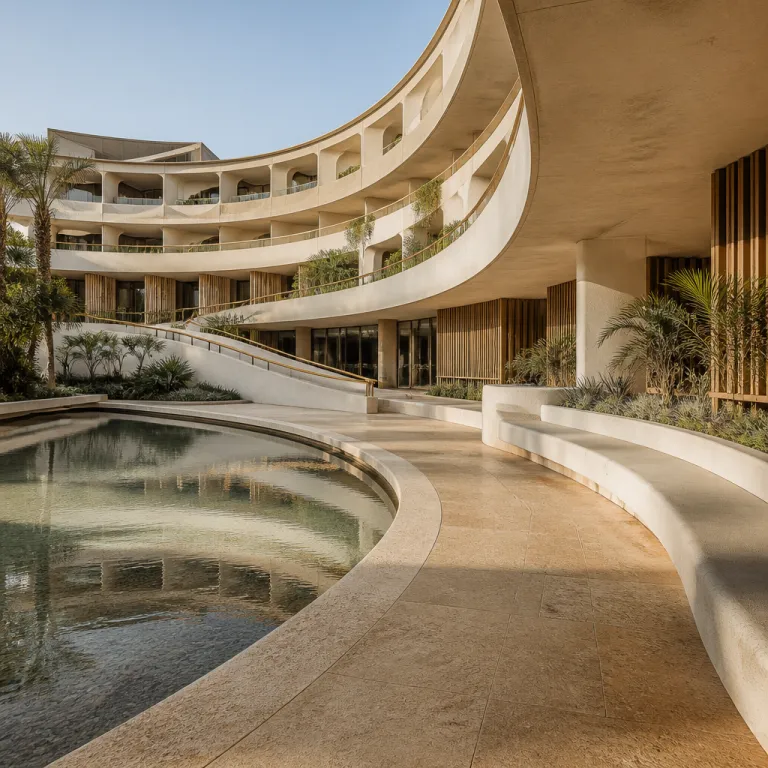
Reading brazilian modernist design hotels like a local architect
Brazilian modernist design hotels are not just places to sleep. They are liveable essays in brazilian modernism, where every line, curve and material choice tells you how Brazil wanted to live in the tropics. When you travel through the country and read each hotel as architecture first, the experience of the city around it suddenly sharpens.
Start with the façade, because that is where the design usually speaks loudest. Look for brise soleil screens, free form balconies and raw concrete softened by plants, all signatures that link a contemporary design hotel directly to the work of Oscar Niemeyer and Lina Bo Bardi. In São Paulo or Rio de Janeiro, these elements turn hotels Brazil wide into open textbooks, letting you read the climate, the light and the social ambitions of each city.
Inside, the lobby is your first serious test of credibility. A truly modernist hotel in Brazil will use a restrained palette of concrete, timber, stone and water, rather than decorative excess that fights the architecture. When you see Sergio Rodrigues armchairs, Jorge Zalszupin sofas or pieces by younger designers in dialogue with them, you are in brazilian modernist design hotels that understand heritage rather than simply chasing an Instagram image.
Pay attention to how the room layout works with the structure. In the best design hotels, the room follows the grid or the curve of the building, so the view feels inevitable rather than forced. When a hotel in São Paulo or Rio Janeiro twists a room just to face beaches Copacabana or a mountain Guanabara panorama, you can feel the design compromise immediately.
True modernist hospitality in Brazil is also about how you move. Ramps, generous staircases and open corridors are part of the architecture, not leftover circulation space. When a hotel turns these into social stages, with a framed view of Guanabara Bay or the São Paulo skyline at each landing, you are staying in a property that speaks fluent brazilian modernism rather than quoting it.
From concrete and curves to timber and water: the modernist palette
In brazilian modernist design hotels, materials are never neutral. Concrete is not just structure but a warm, tactile surface that holds shadows, while timber, stone and water soften its edges and bring the tropics into the room. If you want to go deeper into this material language, the guide to the material palette of Brazil’s new hotels on concrete, timber and tropicalia is an essential read before you book.
Walk into a serious design hotel in São Paulo and run your hand along a board formed concrete wall. You will often feel the grain of the timber that shaped it, a quiet nod to the way architects such as Lina Bo Bardi and Paulo Mendes da Rocha treated concrete as a living material. In Rio Janeiro, some hotels use the same approach on terraces facing Guanabara Bay, where the rough concrete plays against the soft Atlantic light and the distant line of Sugarloaf Mountain.
Water is another key player in brazilian modernist design hotels. A slim pool running parallel to a concrete wall, or a shallow reflecting basin under a ramp, cools the air and doubles the architecture in a single image. When you see this in hotels Brazil wide, from the dense city of São Paulo to coastal Bahia, you are looking at a direct translation of mid century ideals into contemporary hospitality.
Landscaping matters as much as structure. Many modernist inspired hotels in Rio de Janeiro and São Paulo borrow from Roberto Burle Marx, using tropical planting to blur the line between interior and exterior. When a rooftop bar wraps around a garden terrace instead of a bare deck, the panoramic views of the city feel curated rather than simply high.
Furniture completes the story. A room that pairs concrete floors with Sergio Rodrigues loungers, woven chairs and linen curtains is not chasing nostalgia, it is aligning with brazilian modernism at a human scale. When you see this level of coherence repeated across several hotels, you start to understand why design has become a primary differentiator in Brazil’s current hotel boom.
São Paulo and Rio: cities where hotels quote Niemeyer and Bo Bardi
São Paulo is the intellectual capital of brazilian modernist design hotels. The city grew around concrete, glass and elevated highways, and its best hotels respond with calm interiors, deep overhangs and brise soleil that filter the fierce light. When you book a hotel in São Paulo, you are choosing how you want to read this vertical city from your room.
Look for properties that reference Lina Bo Bardi in their bones rather than on their mood boards. A lobby that feels like a public living room, with long communal tables, exposed structure and books to actually read, is closer to her SESC Pompéia spirit than any framed photograph. In these hotels Brazil wide, the architecture invites you to stay, work and talk, not just pass through on your way to a spa or rooftop bar.
Rio de Janeiro plays a different game. Here, brazilian modernist design hotels must negotiate between the drama of mountains, Guanabara Bay and beaches Copacabana and Ipanema, and the dense neighbourhoods of Santa Teresa and the historic city centre. When a hotel in Rio Janeiro frames Sugarloaf Mountain through a curved window or a cut in a concrete wall, it is quoting Niemeyer’s love of the heroic landscape.
Neighbourhood choice changes the conversation. In Santa Teresa, where the streets climb steeply above Guanabara Bay, smaller design hotels often occupy restored mansions with new concrete additions, creating layered architecture that reflects both colonial and modernist Brazil. Down by Copacabana Ipanema, larger hotels tend to open up with glass and terraces, using panoramic views as their main structural gesture.
Across both cities, the most convincing brazilian modernist design hotels share one trait. They treat the city as part of the architecture, aligning corridors, ramps and lounges with specific views and breezes. When you feel São Paulo’s energy or Rio Janeiro’s coastline shaping your route from room to bar, you know the design is leading, not the decoration.
Chez Georges and the rise of architect led hospitality
Few addresses illustrate the new wave of brazilian modernist design hotels as clearly as Chez Georges in Rio de Janeiro. Perched above Guanabara Bay in the Santa Teresa district, this house turned design hotel reads like a private homage to Niemeyer’s curves and Lina Bo Bardi’s concrete honesty. When you stand on its terrace and look towards Sugarloaf Mountain, you feel how architecture can choreograph a view.
Chez Georges was designed by Wladimir Alves de Souza, often written as Wladimir Alves Souza, a Brazilian architect who absorbed modernist principles and translated them into residential scale. His use of exposed concrete, sweeping staircases and generous glazing gives each room a unique relationship with the mountain Guanabara landscape and the city below. In this hotel, brazilian modernism is not a theme but the structural language of every space.
The rooms at Chez Georges are a lesson in proportion. Concrete ceilings float above timber floors, while large windows frame an ever changing image of Rio Janeiro Brazil, from early mist over Guanabara Bay to the neon glow of the city at night. When you book here, you are not just reserving a room, you are buying into a particular reading of Rio as a modernist amphitheatre.
Public spaces matter just as much. A rooftop bar with panoramic views across beaches Copacabana and the distant line of Copacabana Ipanema turns sunset into a daily ritual, while quieter terraces look back towards the mountain Guanabara ridges that cradle Santa Teresa. In each corner, the design balances openness with privacy, proving how architect led hotels Brazil wide can feel both cinematic and intimate.
For travellers comparing brazilian modernist design hotels, Chez Georges sets a high bar. It shows how a design hotel can be rooted in a specific city, a specific hill and a specific view, rather than a generic global style. When you next travel through Brazil and see the name Chez Georges in a listing, you will know you are looking at a property where architecture leads every decision.
How to book brazilian modernist design hotels with a critical eye
Choosing between brazilian modernist design hotels starts long before check in. The way a hotel presents itself online, from the first image to the room descriptions, already tells you how seriously it takes architecture. When you read a listing that talks only about spa menus and rooftop cocktails, you can assume design is playing a supporting role.
Begin with the basics. Look for clear references to brazilian modernism, not just generic design language, and check whether the architect is named, as with Wladimir Alves de Souza at Chez Georges in Rio Janeiro Brazil. Hotels Brazil wide that credit their architects, landscape designers and furniture choices usually have a stronger design backbone than those that hide behind vague lifestyle phrases.
Next, study the plans and photos as if you were walking the building. Does the rooftop bar feel integrated into the architecture, with panoramic views that align with the main structural axes, or is it a bolt on deck chasing sunsets over beaches Copacabana and Copacabana Ipanema ? In a serious design hotel, circulation from room to lobby to terrace follows a clear spatial logic that you can almost trace from the gallery.
Pay attention to how rooms are described. A credible modernist hotel in Brazil will talk about orientation, light, materials and view, not just bed size and amenities. When a listing mentions concrete walls, timber details and framed views of Guanabara Bay or the São Paulo skyline, you are likely dealing with brazilian modernist design hotels that understand their own architecture.
Finally, use specialist platforms such as mybrazilstay.com as a filter. Our team curates hotels Brazil wide with a focus on design integrity, from urban icons to remote retreats, and we encourage readers to send questions or feedback via direct inbox rather than wade through generic reviews. If you are interested in how architecture shapes wellness, the feature on thermal retreats and highland air on Brazil’s hidden hot springs hotels offers another angle on how design, landscape and hospitality can work together.
FAQ
How can I tell if a hotel in Brazil is genuinely modernist ?
Look for structural honesty, not just decorative references. Exposed concrete, brise soleil, generous ramps and integrated landscaping are stronger signs of brazilian modernism than a few vintage chairs or a mural of Oscar Niemeyer. When the layout, materials and views all work together, you are likely looking at a genuinely modernist influenced property.
Are brazilian modernist design hotels only in São Paulo and Rio de Janeiro ?
São Paulo and Rio de Janeiro concentrate many of the most visible brazilian modernist design hotels, but the language has spread across the country. You will find architect led properties in Bahia, Minas Gerais and the southern states, often blending modernist principles with regional materials. Checking whether a hotel credits its architect is a good first step anywhere in Brazil.
Do modernist design hotels in Brazil always use concrete ?
Concrete is a hallmark of brazilian modernism, but it is not mandatory. Many contemporary hotels reinterpret the style with lighter structures, timber and stone, while still following modernist ideas about light, proportion and indoor outdoor living. What matters is the coherence between structure, materials and the surrounding landscape.
Are these design focused hotels suitable for solo travellers ?
Yes, brazilian modernist design hotels often work especially well for solo travellers. Their public spaces are usually designed as social living rooms, with long tables, libraries and terraces that make it easy to meet people without forced interaction. Clear sightlines and thoughtful lighting also help solo guests feel secure and oriented in the building.
Is it worth paying more for an architect led hotel in Brazil ?
If design and sense of place matter to you, the premium is usually justified. Architect led hotels tend to offer better natural light, more comfortable circulation and views that feel intentional rather than accidental. Over several nights, these qualities can change your entire perception of the city you are visiting.